 Weather24
What is considered high barometric pressure? A simple chart
In short: at sea level, above 30.20 inHg (1023 hPa) is high barometric pressure, below 29.80 inHg (1009 hPa) is low, and the standard is 29.92 inHg (1013 hPa). High pressure usually means fair, dry weather; low pressure means clouds, rain and wind. The direction of change tells you more than the number.
Pressure over the day for your exact location, with a Rapid pressure drop warning — in the Weather24 app.
Barometric pressure chart
- above 30.50 inHg Very high above 1033 hPa strong high: clear, calm, often cold at night
- 30.20–30.50 inHg High 1023–1033 hPa fair, dry, light winds
- 29.80–30.20 inHg Normal 1009–1023 hPa anything goes — watch the trend
- 29.50–29.80 inHg Low 999–1009 hPa clouds, rain, wind more likely
- below 29.50 inHg Very low below 999 hPa storm system; deep storms go under 29.2
Values are for sea-level (relative) pressure — what weather reports and apps show. A barometer at altitude reads lower: about 0.1 inHg less for every 90 feet, so Denver’s raw reading is around 24.6 inHg even on a normal day.
High vs low pressure: what weather to expect
Air sinks and warms, clouds break up, winds are light. Summer: sunny and hot. Winter: clear, cold nights, fog in valleys.
Air rises and cools into clouds; fronts bring rain or snow and stronger wind. The deeper the low, the windier.
A drop of 0.06–0.09 inHg (2–3 hPa) in three hours usually means a front within hours.
Pressure climbing after rain usually means the system is moving out.
Track pressure in the Weather24 app
- Pressure over the day — a 24-hour chart for your location with the normal line and the trend.
- Rapid pressure drop — a warning when pressure is set to fall sharply before the day is out.
- Highs and lows on the map — see where the next low is and when it arrives.
- Meteo-sensitivity — an hourly 0–10 score of how hard the weather is on weather-sensitive people, with the reasons.
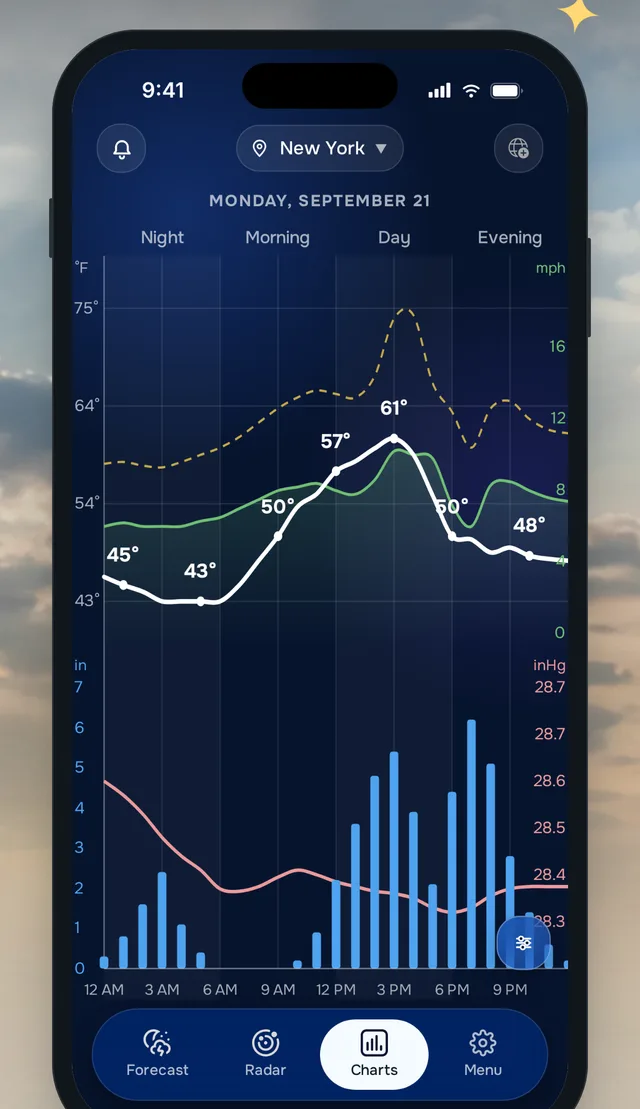
Pressure in the Weather24 app
Pressure over the day with the normal line and trend, a pressure map with highs and lows, and a Rapid pressure drop warning — for your exact location, next to the forecast and rain radar.
Frequently asked questions
What is considered high barometric pressure?
What does high barometric pressure mean for the weather?
How do you read a barometer?
What does a falling barometer mean?
See also: Barometric pressure today by city · Rain radar · Best barometric pressure for fishing · Migraine weather forecast
Also worth knowing
Solar Storm Today: Kp Index and 3-Day Forecast
Is there a solar storm today? The current Kp index from NOAA, the three-day geomagnetic storm forecast, what G1–G5 mean and how the Weather24 app shows geomagnetic activity.
November 5, 2026 →What Is a Good AQI? The 0–500 Air Quality Scale Explained
What the EPA air quality index levels mean, which pollutant drives the number, the AQI in major US cities right now and how the Weather24 app shows air quality for your location.
November 3, 2026 →Best Barometric Pressure for Fishing: Read the Trend, Not the Number
Why a falling barometer often means a better bite, what counts as high and low pressure in inHg, where pressure is changing across the US right now and how to track it in the Weather24 app.
November 2, 2026 →