 Weather24
Normal barometric pressure: what the number should be
In short: normal barometric pressure is 29.92 inHg (1013 hPa) at sea level, and anything from about 29.50 to 30.50 inHg is ordinary weather. That is the sea-level figure from weather reports. A barometer at altitude reads lower — in Denver about 24.6–25 inHg on a normal day — and that’s fine.
Today’s barometric pressure and whether it’s low, normal or high — free in the Weather24 app.
What is normal barometric pressure?
The reference value is the standard atmosphere: 29.92 inHg, or 1013.25 hPa, at sea level. It is an average, not a target — real pressure moves up and down every day as highs and lows pass. Most of the time the sea-level reading sits between about 29.50 and 30.50 inHg, and all of that is normal weather.
| Sea-level pressure | inHg | hPa (mbar) | In the Weather24 app |
|---|---|---|---|
| Standard | 29.92 | 1013 | normal |
| Usual range | 29.50–30.50 | about 1000–1033 | mostly normal |
| Low | below 29.53 | below 1000 | low |
| High | 30.31 and up | 1027 and up | high |
The units are just different scales for the same thing: 29.92 inHg = 1013.25 hPa = 760 mmHg = 14.7 psi = 1 atm. A hectopascal and a millibar are equal. What low and high pressure mean for the weather is a separate question — see what is considered high barometric pressure.
Why your barometer reads lower: altitude
Pressure is the weight of the air above you. Climb, and there is less of it: near the ground pressure falls by roughly 1 inHg for every 1,000 feet. So the raw, “station” pressure in a mountain town is far below 29.92 even on a calm, normal day. Denver, the Mile High City, is the classic US example.
| Place | Elevation | Typical station pressure |
|---|---|---|
| Coast | sea level | about 29.9 inHg |
| Denver | 5,280 ft | about 24.6 inHg |
| Leadville, CO | 10,150 ft | about 20.5 inHg |
| Pikes Peak summit | 14,110 ft | about 17.5 inHg |
To compare places, weather services convert every reading to what it would be at sea level. That’s why a forecast for Denver may say “30.05 inHg” while a barometer on a Denver windowsill says 24-something. Both are right — they answer different questions. For what is falling from the sky over the city right now, check the Denver rain radar.
Compare sea-level numbers with sea-level numbers. 29.92 inHg is “normal” only for pressure reduced to sea level — never for a raw reading at altitude.
How to read the number
- Check which pressure it is. Forecasts and most apps show sea-level pressure. A home barometer shows station pressure unless it is calibrated to sea level.
- Place it against 29.92. A few tenths above or below is normal day-to-day movement.
- Look at the direction. A fall of 0.06–0.09 inHg (2–3 hPa) in three hours tells you more than the level itself: a front or storm is usually on the way. A steady rise after rain means clearing. Whether rain is already close shows on the rain radar. Anglers read the same trend — see best barometric pressure for fishing.
Barometric pressure in the Weather24 app
- Current pressure and its level — free. The Pressure card shows today’s value and whether it is low, normal or high.
- Your choice of reference: in the settings you can pick pressure at your location’s altitude or reduced to sea level.
- Your unit: inHg, hPa or mmHg.
- With Pro: pressure over 24 hours with the normal line, the day’s low and the trend; pressure in the Charts tab; and the Pressure map layer with highs and lows.
- Rapid pressure drop appears as a card in the app when pressure is set to fall by more than 15 hPa (0.44 inHg) before the day ends. There are no push notifications for pressure.
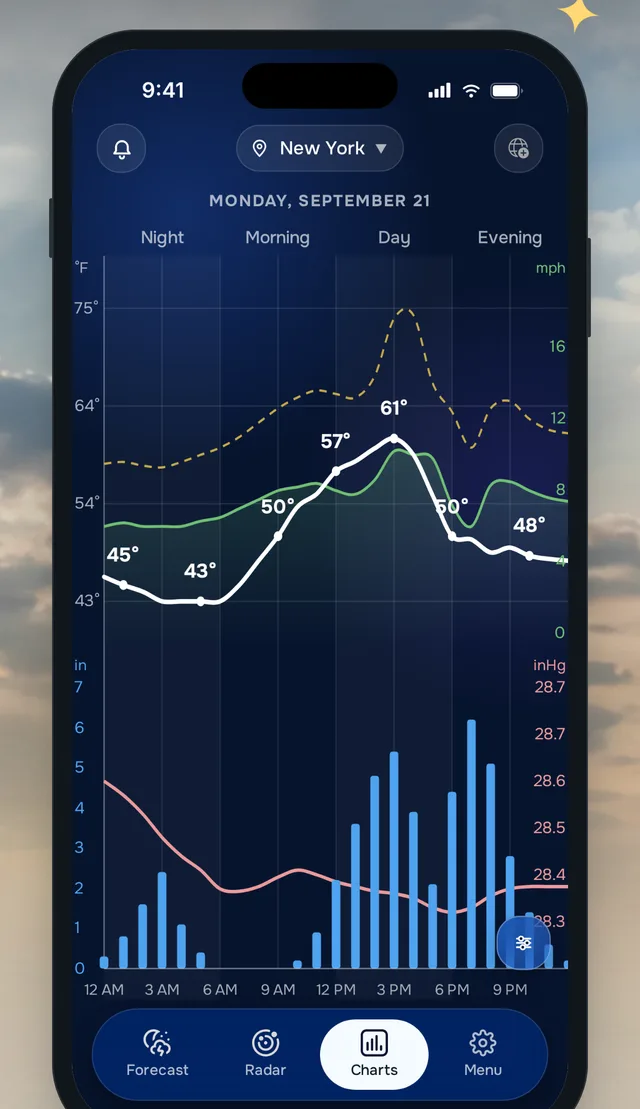
Barometric pressure in the Weather24 app
The current pressure and its level for your exact location, in inHg, hPa or mmHg, at your altitude or reduced to sea level. With Pro: pressure over the day with the normal line and trend, and a pressure map with highs and lows.
Frequently asked questions
What is normal barometric pressure?
What is normal atmospheric pressure in different units?
Why is barometric pressure lower in Denver?
Is 30 inHg high or low?
What is the highest and lowest barometric pressure ever recorded?
See also: Rain radar · Rain radar Denver · Lightning map
Also worth knowing
What Is Considered High Barometric Pressure? A Simple Chart
High, normal and low barometric pressure in inHg and hPa, what each means for the weather, how to read a barometer and where pressure is highest and lowest in the US right now.
November 6, 2026 →When Will It Stop Raining? Check It to the Quarter Hour
How the Weather24 app works out when the rain ends from a 15-minute precipitation forecast, which weather models it uses in the US and when the end-of-rain estimate can be off.
November 6, 2026 →Solar Storm Today: Kp Index and 3-Day Forecast
Is there a solar storm today? The current Kp index from NOAA, the three-day geomagnetic storm forecast, what G1–G5 mean and how the Weather24 app shows geomagnetic activity.
November 5, 2026 →